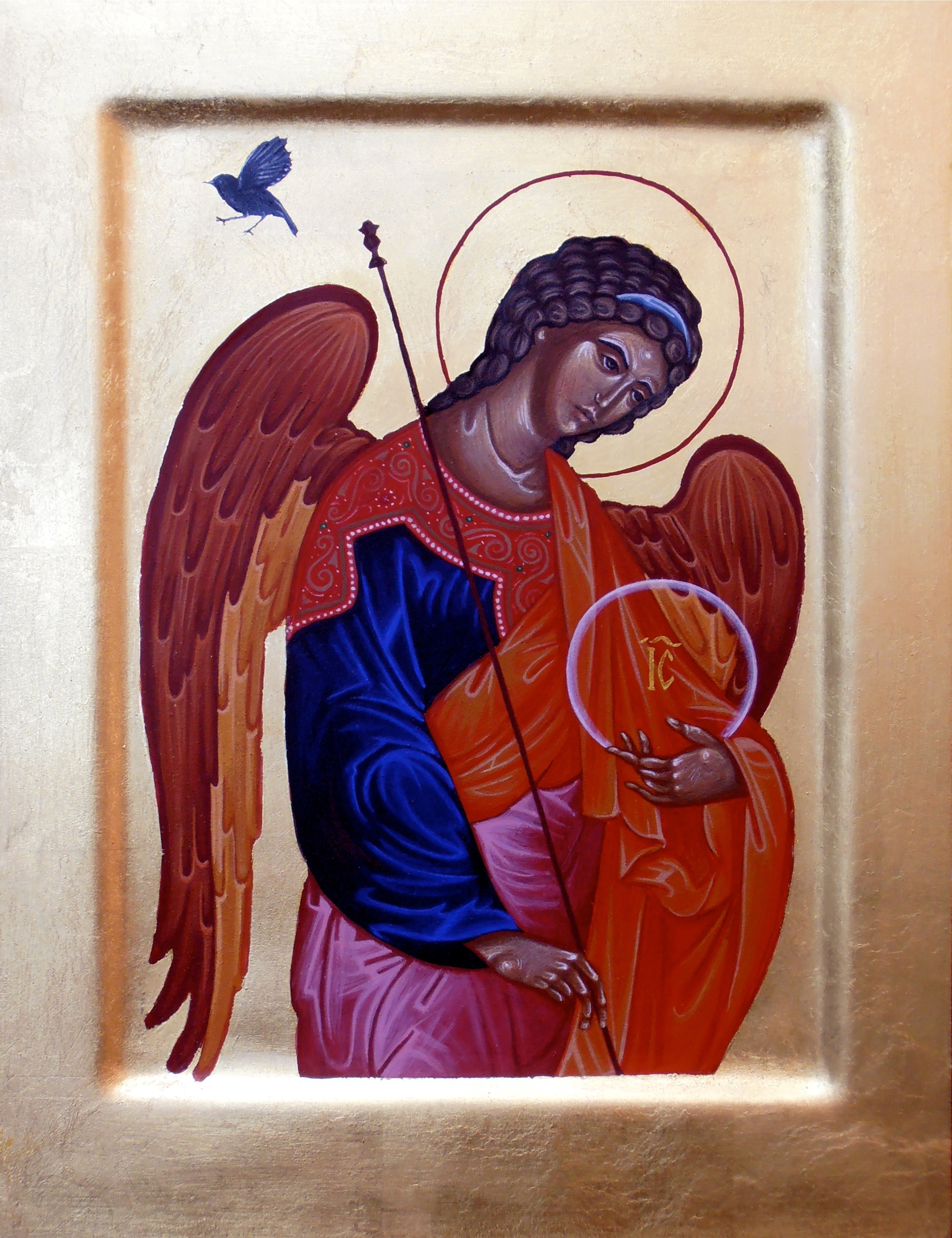
Mes ancêtres maoris sont arrivés à Aotearoa[1] nom en langue maorie de la Nouvelle Zélande, à bord du grand waka[2] Arawa[3] après avoir navigué à travers le Pacifique Sud avec pour seuls guides les courants océaniques,les étoiles,le soleil et ce désir profond,cette force qui animent tous les grands navigateurs.
J'ai grandi dans ma ville natale de Taupo au pied du Maunga[4] Tauhara, un volcan endormi au centre de l'île du Nord. Pour nous, c'était la femme enceinte endormie car c'est ce que sa silhouette évoque. Enfant,je pouvais l'apercevoir depuis la fenêtre de ma chambre et je me souviens encore très nettement de l'immense incendie qui a défiguré son sommet ouest. À chacun de mes retours à Taupo, je guettais son apparition et le voir, m'apportait toujours du réconfort, le sentiment d'être enfin chez moi. Sa présence est devenue à tel point partie intégrante de mon quotidien qu'il a commencé à apparaître dans mes dessins et mes rêves.
J'ai gravi le Tauhara à plusieurs reprises. Depuis son sommet, la vue panoramique s'étend sur le lac Taupo et vers le Sud sur les montagnes Ruapehu, Tongariro et Ngãuruhoe. Ma dernière ascension remonte à quatre ans et s'est révélée plus difficile que dans mes souvenirs. En m'arrêtant régulièrement pour faire des pauses, j'ai prié les arbres et les tuis[5] de me donner de la force, avant d'atteindre enfin le sommet où mon ami m'attendait patiemment.
Le Tauhara était et reste pour moi un point de repère majeur.
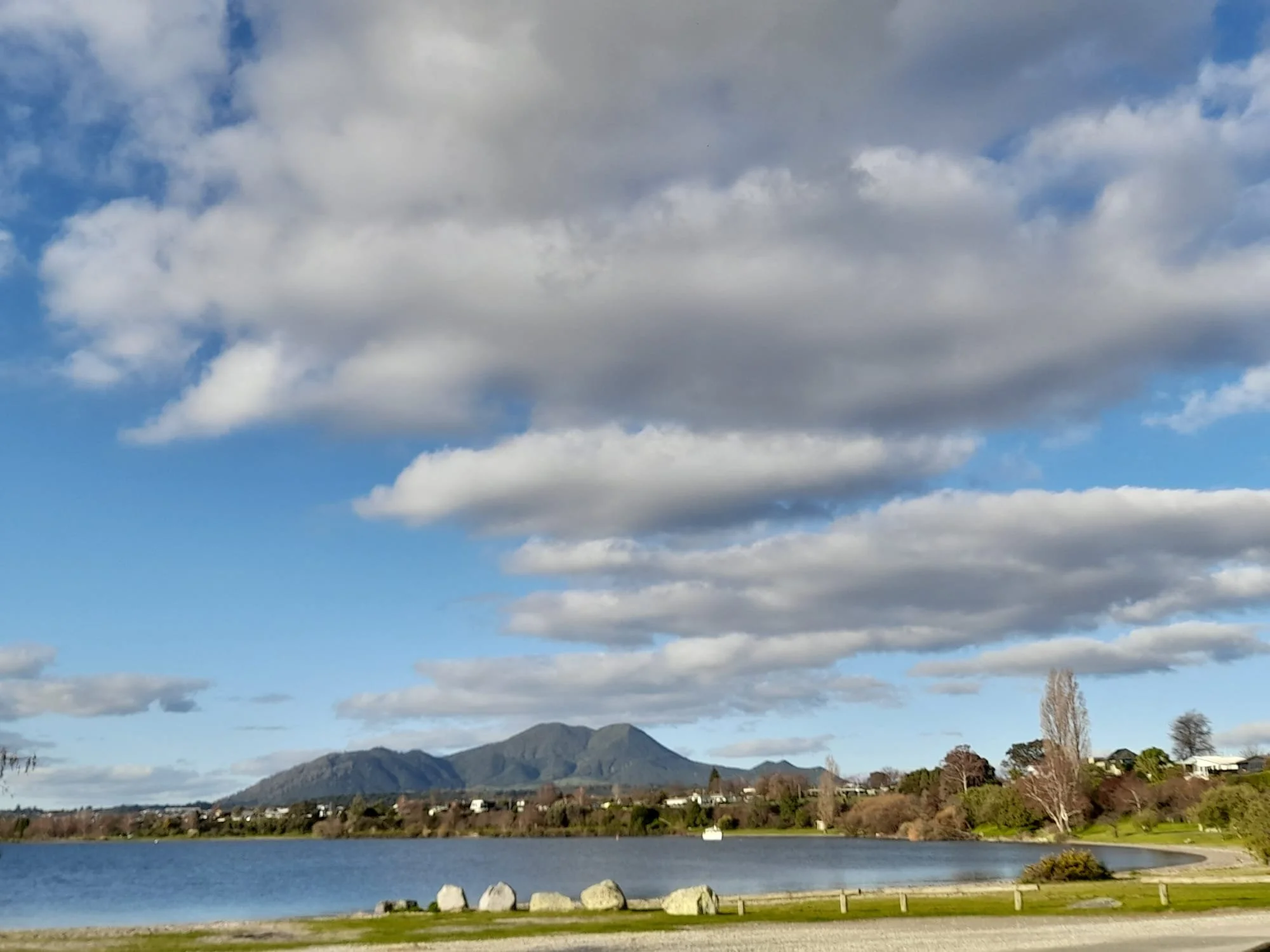
Mont Tauhara, Taupo, Nouvelle-Zélande
À une vingtaine d'années, j'ai commencé à voyager. Je suis arrivé à Londres au début des années 90. Sans montagnes, la ville semblait relativement plate comparée à ma ville natale et la nuit, une brume orangée, fruit d'un mélange de pollution lumineuse et atmosphérique, masquait la lumière de la lune et des étoiles. Il était alors indispensable pour un voyageur de cette époque d'avoir un guide"A-Z" pour se repérer, livre certes utile mais encombrant d'où mon idée de le consulter puis de recopier et dessiner un plan sur une feuille de papier. C'est ainsi que les monuments et les stations de métro londoniens sont devenus des indicateurs plus efficaces de direction et de position.
Ma quête de repères a persisté.
Parallèlement à réalisation de plans, j'ai appris à peindre des icônes religieuses orthodoxes. Ces icônes m'ont fasciné de part la portée de leurs "sermons visuels" destinés à guider les fidèles car plus que de simples oeuvres d'art, je les concevais davantage comme des textes religieux à lire non pas au pied de la lettre mais avec la volonté d'en saisir le sens profond souvent au coeur du mystère.
Trente ans plus tard, j'ai quitté le Royaume Uni pour l'Europe réalisant ainsi un rêve de toujours : vivre et travailler dans une région où, jeune étudiant en art, j'avais admiré les oeuvres de grands artistes parmi lesquels Vasarely et Cézanne qui, à mes yeux ont marqué le paysage artistique. J'étais loin de me douter que je finirai par m'installer en Provence, région qui a été si importante pour eux.
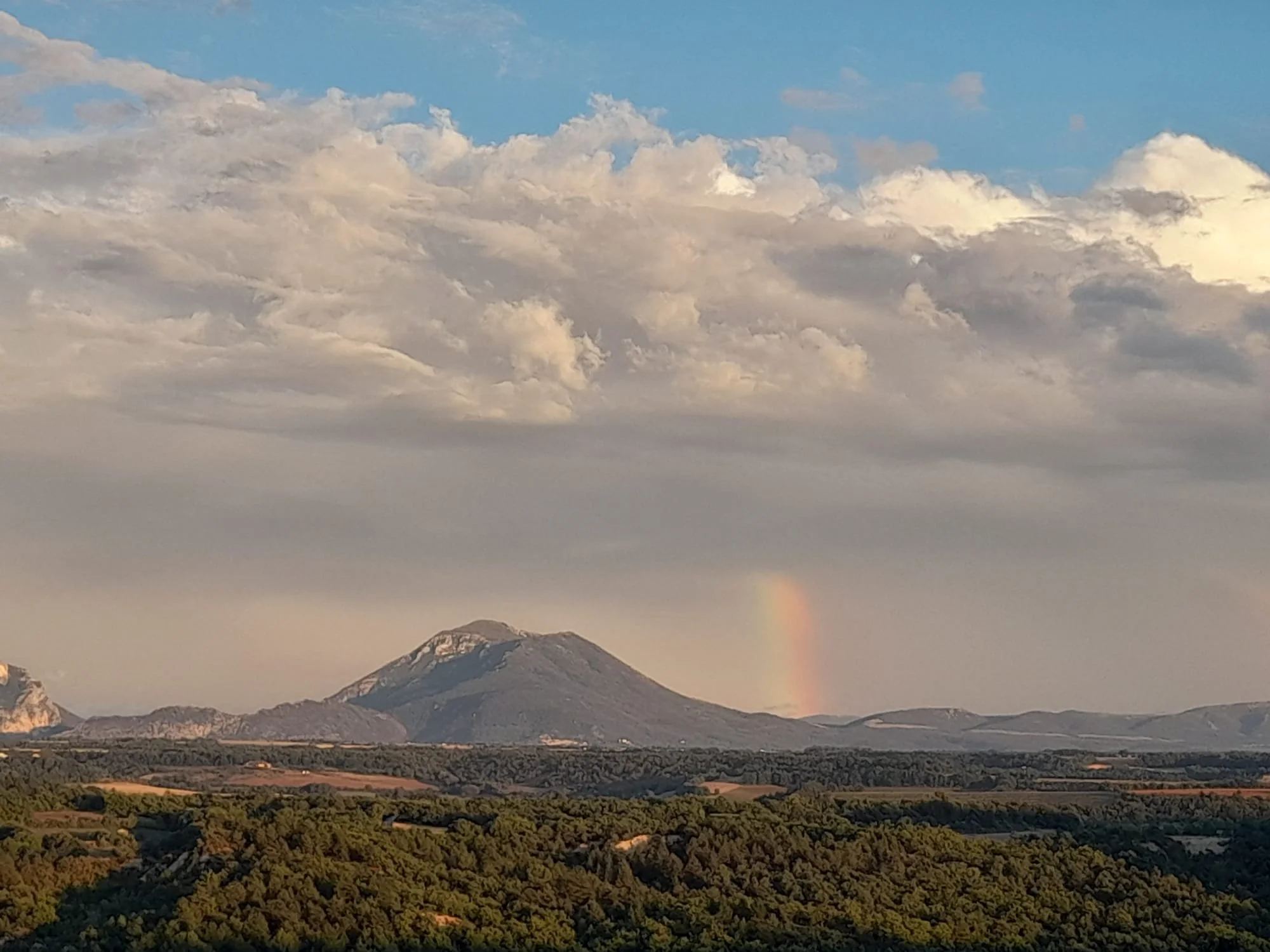
Le Grand Marges, Provence, France
C'est le Grand Margès qui m'a accueilli dès mon arrivée à Puimoisson.
Cette montagne du Var présente une ressemblance frappante avec Tauhara. Fasciné, je l'ai peinte chaque jour pendant quarante jours en utilisant des pigments de Roussillon dans le Luberon. J'ai envoyé ces petites oeuvres aux quatre coins du monde à mes amis et mes proches.
Un de mes cousins a suggéré que le Grand Margès était mon TOHU.
En langue maorie, ce mot désigne un signe, un symbole, une marque ou un présage qui guide et oriente le chemin de vie. C'est vrai qu'aujourd'hui le Grand Margès est devenu pour moi un point de repère, un emblème d'une grande importance, un point de référence. Depuis ma nouvelle demeure, je le contemple chaque jour. Il change fréquemment de forme et de couleur, disparaissant parfois totalement pour ne réapparaître que lorsque les nuages se dissipent et que la pluie cesse.
Vers quoi m'oriente - t il ? Je cherche encore la réponse mais pour tenter de mieux comprendre, de saisir où je me trouve, où est ma place, mon appartenance, je continue à peindre et à dessiner des cartes.
Le Grand Marges 2026
[1] Aotearoa : nom maori de la Nouvelle-Zélande, signifiant “Terre du long nuage blanc”.
[2] Waka mot maori désignant une pirogue.
[3] Te Arawa : confédération d'iwi et de hapū (tribus et sous-tribus) maoris, et nom de l'une des pirogues utilisées par les premiers Maoris lors de leur migration.
[4] Maunga mot maori pour montagne.
[5] Tui : oiseau endémique ; les premiers colons anglais l'ont surnommé « l'oiseau-pasteur » en raison de son collier blanc.
Un grand merci à Thérèse pour la traduction.
TOHU
My Maori ancestors arrived in Aotearoa[1] in the great waka[2] Arawa[3] having navigated their way across the south Pacific by the stars at night, the sun by day, the ocean currents and an inner desire and strength found in all great navigators.
In my hometown of Taupo, Aotearoa, New Zealand I grew up at the base of the Maunga[4] Tauhara a dormant volcano in the centre of the north island. We grew up knowing her as the sleeping pregnant woman. Her form resembling a slumbering figure on her side. I climbed Tauhara a number of times where at her summit there were panoramic views over Lake Taupo, towards Ruapehu, Tongariro and Ngāuruhoe mountains to the south. Tauhara was and is a significant landmark. As a youngster I had a direct view of her from my bedroom window and have vivid memories of a great fire that swept up and over her western summit. When I travelled away from Taupo I would seek her as I returned. When she came into view there was always a sense of reassurance and being close to home. I was aware of her every day and she started to appear in my drawings and my dreams. My last visit to Tuahara was four years ago where I decided to trek to her summit. The climb was more difficult than I remembered. Stopping for regular breaks I prayed to the trees and the tuis[5] to give me strength finally reaching the top where my friend was patiently waiting.
In my late teens and early twenties I started travelling further afield. Arriving in London in the early 1990’s it was necessary for all travellers to buy an A-Z guide to find their way around. After a while though it became annoying to carry a bulky book so I would often check the guide and then copy and draw a map on a piece of paper. This worked sometimes. London landmarks and underground stations became more effective indicators of direction and whereabouts. There were no mountains and the city seemed relatively flat in comparison to my hometown. At night star or moonlight was often blocked out by an orange haze , caused by a mix of light and air pollution But my search for signs continued. As well as drawing maps, I studied and learnt how to paint orthodox religious icons. Understood as religious texts more than art I was captivated by icons and the significance of these “visual sermons”, created to guide the faithful. I was taught Icons are to be read like religious text, not literally but with a desire to seek deeper understanding, often in the midst of mystery.
Thirty years later I left the United Kingdom for Europe honouring a life-long dream to live and work in a part of the world where as a young art student I had read the stories and loved the art of so many great artists. Two being Victor Vasarely and Paul Cezanne. Both being significant map creators in my mind. Little did I know I would end up in a region so important to both.
Le Grand Margès greeted me upon my arrival in Puimoisson. A mountain situated in the Var department, Provence, France she bore an uncanny resemblance to Tauhara. Enamoured I painted a view of her every day for 40 days using pigments sourced from Roussillon in the Luberon, and sent each small scene to friends and family around the world. My cousin suggested Le Grand Marges was my Tohu, a Maori word meaning a sign, symbol, mark or omen guiding and directing me in my life journey. Le Grand Marges became a sign-post, a landmark of significance for me. From my new home I look out towards her every day. She often changes form and colour, and sometimes disappears completely before reappearing when the clouds lift and the rain stops. What is she pointing me to? I am still trying to answer that question but to try and seek some understanding, a sense of where I am, where I belong, I continue to paint and draw maps.
[1] Aotearoa the Maori name for New Zealand meaning “Land of the Long white Cloud”
[2] Waka a Maori word for canoe.
[3] Te Arawa a confederation of Maori iwi and hapū (tribes and sub-tribes) and the name of one of the canoes that early Maori migrated in.
[4] Maunga , Maori name for mountain
[5] Tui, native bird. Early English Colonialists named it the parson bird due to its white collar.